IS CARE
Wendy Brown, Robin Wall Kimmerer, Mierle Laderman Ukeles, pubic hair
I once knew a boy who told me his mother was known as the patron saint of housecleaners. In essence, they employed multiple housekeepers and were such good people that she was somehow a living saint. I imagine he told me this to imply that, by proxy, he was also a very good person (of considerable means)
Today, I don’t feel any particular shame or pride in having cleaned affluent people’s vacation homes to make ends meet. I’m no worse or better for knowing how to do a crisp hospital corner tuck. It’s just how it was. We each have our unique origin stories, and you get what you get, right?
Still, there was something about the congratulatory nature, the sense that she, and by affiliation, he deserved a sainthood, even a jesting one, for simply employing those they clearly thought of as less fortunate, those needing charitable saving by the good gentlepeople, that drops a bucket of stones down my gut, even now.
While recovering from an injury a few years ago, I myself had a six-month spell of cleaning help. It was equal parts wonderful and awful. Even though I was nearly immobile, I felt a compulsion to pre-clean. My friend R.S. teased me for my prepping and I noted she tidied before getting her bits waxed. Micro is the macro, as above, so below.
I know that certain time consuming tasks like dishes and laundry leave room for someone else to carefully attend to dirtier deeds, or maybe I was a little ashamed of letting it all hang out. Could be we only want to make it a little easier on those witnessing our overhangs. And perhaps these are other vectors of care and caring.
There is a niggling concern that it might have been my feeble reach for a similar version of sainthood. Look, I’m helpful. Even whilst damaged, I tidied up for you. If so, was R.S. attempting goodness by trimming her flyaways? Are we simply unable to let it be a huge fucking mess? Are we caring, or are we just unable to stop proving ourselves?
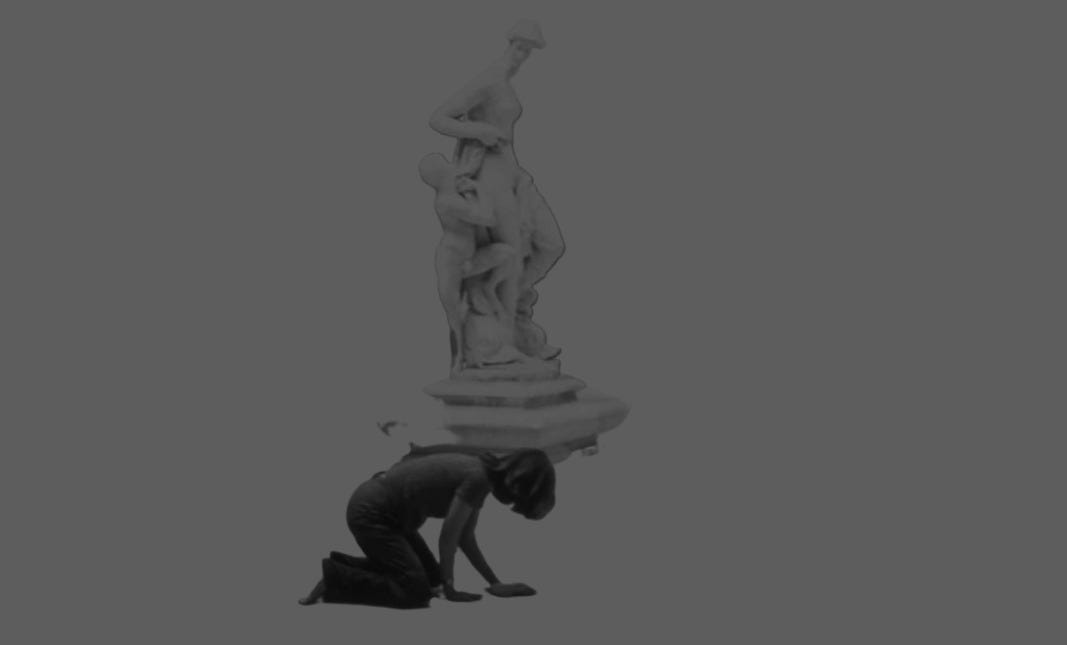
I have developed a few axioms, three clear, simple laws for life. There are only three, and you better believe I need them to function. Some people have saints and moral affiliations, some people have data and scientific metrics, some people have astrology and the cosmos. I have three hard-earned axioms that function as the absolutish truths that apply to everything. Number two of those three is dot dot dot EVERYTHING IS MAINTENANCE.
Everything is maintenance. It’s true for everyone. If you don’t do the dishes, no dishes. If you don’t brush your teeth, diseases. If you don’t pay the bills, debt. Don’t practice, don’t grow. Don’t move, break. Don’t maintain your community, your friendships, your relationships; they disintegrate. And yes, sometimes maintenance means giving space. That’s still maintaining, ya?
Maintenance is everything is maintenance is everything

Artist Mierle Laderman Ukeles wrote an excellently titled manifesto in 1969. Maintenance Art Manifesto 1969! Proposal for an exhibition “CARE”. She had a new baby and found herself unable to keep boundaries between her art practice, domestic care, and daily survival. So she liquefied them and cooked up something new from the concoction. She seasoned it with that special blend of pragmatism and imagination found in artist-activists’ kitchen cabinets.
Here’s a quote of hers I often think about
“The sourball of every revolution:
After the revolution, who’s going to pick up the garbage on Monday morning?”
Mierle Laderman Ukeles
Nobody wants to think of themself as the answer to that question. But frankly, there is someone who always does the picking up. I’m less and less surprised by those who are left anticipating everyone’s needs all the time. Is that saintly? Nah. It’s just doing what’s necessary for the whole.
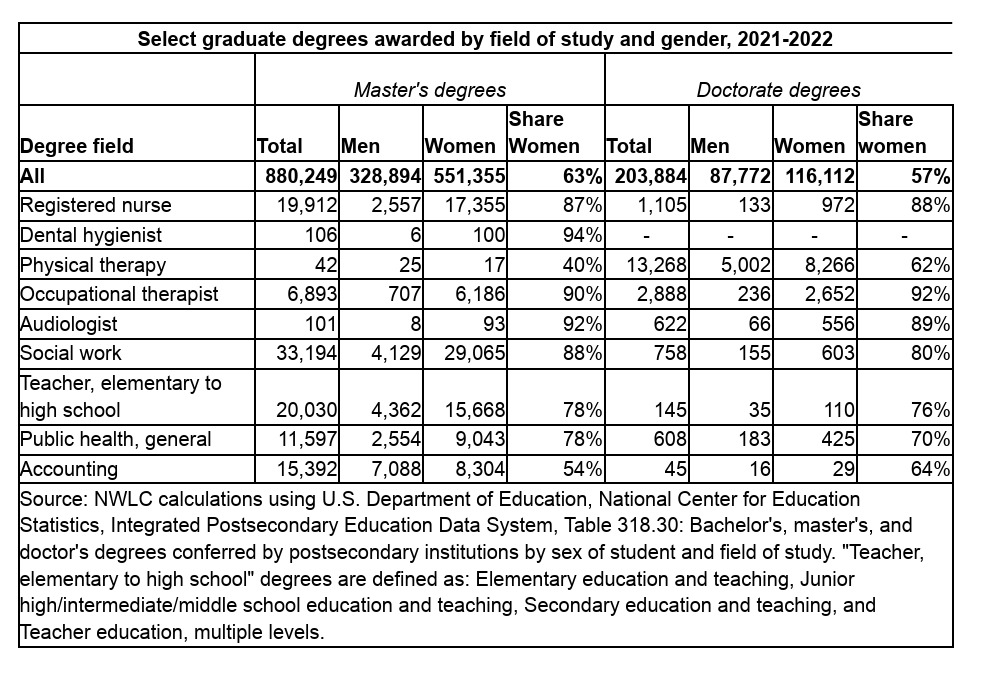
Women disproportionatly do maintenance work, labour that is both unpaid and paid. And in these delightful times, it turns out the nurses, the therapists, the caretakers are no longer considered professional enough by the current federal government to qualify for federal student loan access. I’m being a tad reductive, but taking effect next month, the newest legislation eliminates Graduate PLUS loans for “non-professional” degrees. Nursing didn’t make the “professional” degree list. Neither did teaching. Neither did behavioral or mental health. These are maintenance careers, systemically conceived of as women’s work. And these are modes of care.
This forces women who must borrow in order to attend to turn to private lenders, which costs these women exponetially more than subsidized loans. Of course, there’s nothing mysterious about where women are expected to be if they can’t ascend into financial self-sufficiency and personal security.1
Alright. Let’s change the angle of this vector and carry on toward another way care and caring are uncared for. Cos naturally, there is another position available. Some people take it.
I once knew a boy who published some clever poetry. On one page, only this:
Q: What do you think about me?
A: I don’t think about you.
Brevity wit soul something. The intended effect is A is cool cos A doesn’t care about Q. Yet, when you sit with it, the author’s position as A feels like a carefully tailored affect. Appearing aloof and cool, contained and unbothered, is a guarded position to hold in our culture of individualistic aims with a transactional element that I struggle to enjoy. Here we have the self as human capital, a sealed unit, self-investing, owing nothing to the other. Self invests in self. Self calculates the returns on self’s choices in education, relationships, health, really everything.
That sharp little poem performs this as detached enlightenment. Still, A doesn’t think of Q isn’t a way of being; it’s a reminder that culture trains people to understand themselves as individual capital rather than as collaborative members of anything. This pose of cool non-relation isn’t wisdom or enlightenment. It’s a stab designed to punish Q and protect A in five stony words.
There’s a political theorist named Wendy Brown who might frame this as a tidy little demonstration of Foucauldian subject-formation. That boy I once knew didn’t decide to be non-relational. He was produced that way, by a rationality so pervasive it feels like a cool, uncaring (obv caring) personality.
In Brown’s Undoing the Demos: Neoliberalism’s Stealth Revolution there’s a passage where she emphasizes how the transactional self isn’t a byproduct, it’s the goal. (Oof, also, aha!) So, as the market model gets pushed into every domain and activity, even where money is not at issue2 it reconfigures human beings exhaustively as market actors, always, only, and everywhere now as homo economicus. I imagine she’d point to the cool, non-relational self not as freedom but as an assumed formation. Self as sealed unit, self-investing and sovereign. Unbothered and untouchable.3
Foucault was watching neoliberalism emerge in real time and expressed ambivalence about it. Brown writes after decades of its consequences, and you know she is not ambivalent. She raises questions about what happens when everyone understands themselves as mere capital. What happens to the idea of maintenance and mutual aid, and what happens to a collective public that governs itself? Her answer is basically that it all becomes a language no one shares or understands:
“ …concerns with justice cede to the mandates of growth rates; liberty submits to the imperative of human capital appreciation; equality dissolves into market competition; and popular sovereignty grows incoherent.”
Wendy Brown
If we can’t communicate, can’t show care without fear of being punished, how will we clean up after the revolution? (Or even have a revolution to clean up after?) OK. One more Brown quote, cos it’s a doozy and at the hot center of my flaming ball of loving philippic.
“Women both require the visible social infrastructure that neoliberalism aims to dismantle through privatization and are the invisible infrastructure sustaining a world of putatively self-investing human capitals.”
Wendy Brown
Read it again. Damn, right?

This brings us to the non-human. If you check out anything I’m linking to, make it the work of Robin Wall Kimmerer, a botanist and member of the Citizen Potawatomi Nation who writes from inside a knowledge system that never separated care from survival in the first place. Everything she writes is accessible and actionable, and her 2024 book The Serviceberry uses serviceberries (a variety of small fruiting trees) as a model for an entirely different kind of economy. The serviceberry gives its fruit away freely. Birds munch on it, carry the seeds, and shit them out somewhere new, and the cycle of life keeps on keepin’ on. The tree doesn’t strategize or perform generosity or withhold fruits to appear unbothered. Instead, it gives freely, and this giving is what keeps everything alive.
“The currency in a gift economy is relationship, expressed as gratitude, as interdependence and the ongoing cycles of reciprocity. The economic unit is ‘we’ rather than ‘I,’ as all flourishing is mutual.”
Robin Wall Kimmerer
Reciprocity is not a transaction. It is maintenance. And this relationality is different from sainthood. Sainthood is still about the individual, collecting coins of virtue and stacking them for interest in a single sealed unit. The serviceberry doesn’t get a sainthood when it feeds everything around it, and because of this, the next spring, there are more serviceberries wherever the birds release the seeds.
Kimmerer is speaking of mutual aid, which is not charity. It is not the patron saint of house cleaners descending to save the less fortunate. Mutual aid is lateral, moving between equals who understand their survival as shared. An elite coolness just won’t do when “all flourishing is mutual.”
The boy I once knew with the sainted mother understood care as a position accruing points of virtue. I’ve caught myself there, too, with my pre-clean. The presentation of togetherness. The tidied-up effort that tries for a look, I helped and thus am forever after a good human of value. Perhaps the work is just learning the difference between care as performance and care as the thing that actually sustains life. Since somebody always does the picking up, we might as well give a thought to why.
xo, <3

See: coolness
I wish I had another un for you.
Thank you for this! A very relatable read! The link on your stories brought me here. Thinking on the gift economy all the time these days, how deeply it opposes the marketeer mindset that increasingly infects us all, in deviously nuanced ways. Every aspect of our lives is threatened with transaction over care, the antidote being the act of giving and the response of gratitude within our relationships. I like how you analyze your personal vignettes to illustrate this and more. The quotes by Brown and Kimmerer are on point and so immediately accessible. Need to read their works
This piece is phenonmenal Lovage.
Damn... I'm going to think about that Wendy Brown quote for a long time.